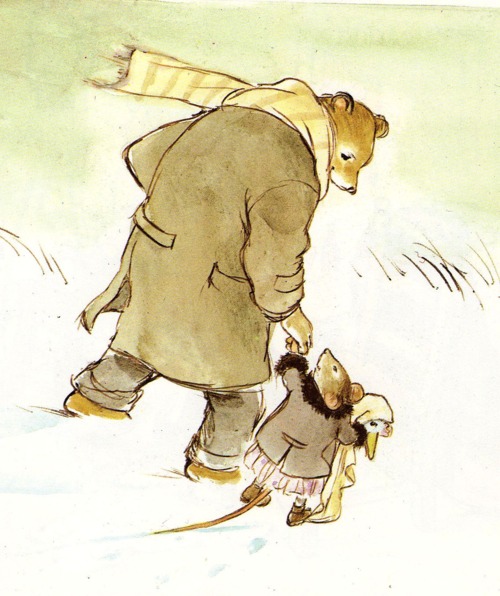
The Growlery

"Sit down, my dear," said Mr. Jarndyce. "This, you must know, is the Growlery.
When I am out of humour, I come and growl here."

Charles Dickens, Bleak House, Chapter VIII

Monday, January 30, 2017

Wisdom from St John Chrysostom

'Christ of Maryknoll' by Br. Robert Lent
"Do you really wish to pay homage to Christ's body? Then do not neglect Him when he is naked. At the same time that you honor Him here with hangings made of silk, do not ignore Him outside when he perishes from cold and nakedness. For the One who said "This is my body"...also said "When I was hungry you gave me nothing to eat"...For is there any point in his table being laden with golden cups while He Himself is perishing from hunger? Don't neglect your brother in his distress while you decorate His house. Your brother is more truly His temple than any Church building."

--Homily 35 on Matthew


"The poor man has one plea, his want and his standing in need: do not require anything else from him; but even if he is the most wicked of all men and is at a loss for his necessary sustenance, let us free him from hunger. Christ also commanded us to do this, when He said, ‘Be like your Father in heaven, for He makes His sun rise on the evil and on the good, and sends rain on the just and on the unjust.’ The almsgiver is a harbor for those in necessity: a harbor receives all who have encountered shipwreck, and frees them from danger; whether they are bad or good or whatever they are who are in danger, it escorts them into its own shelter. So you likewise, when you see on earth the man who has encountered the shipwreck of poverty, do not judge him, do not seek an account of his life, but free him from his misfortune. Why do you make trouble for yourself? God has excused you from all officiousness and meddlesomeness. How much most of us would complain, if God had bidden us first to examine each person’s life exactly, to interfere with his behavior and his deeds, and only then to give alms? But as it is we are freed from all this kind of annoyance. Then why do we bring excessive cares on ourselves? A judge is one thing, an almsgiver is another. Charity is so called because we give it even to the unworthy. Paul also advises us to do this, when he says, ‘Do not grow weary in well-doing … to all men, but especially to those who are of the household of faith.’ If we meddle and interfere with the unworthy, not even the worthy will ever willingly come to us; but if we provide also for the unworthy, undoubtedly both the worthy and those who are worth all of them together will come into our hands. This is what happened to the blessed Abraham, who, because he did not meddle or interfere with those who passed by, was able once to receive angels. Let us imitate him, along with his descendant Job. For he also accurately imitated the generosity of his ancestor, and because of this he said, ‘My door was open to every comer.’ It was not open to one and closed to another, but was simply unlocked for everyone."

--
Homily II on Lazarus and the rich man

Labels: , , , , ,

Sunday, May 11, 2014

On Grampa and grieving

Grampa roasting hotdogs at Kako, the camp in Alaska he built. 


Dave Penz 
(September 8, 1934-May 11, 2014)

My grampa died today. He had had leukemia for a while, but the terrible infection that killed him took us all by surprise. 

This is how I'm feeling: 

Childhood is the Kingdom where Nobody Dies 
by Edna St. Vincent Millay
Childhood is not from birth to a certain age and at a certain age
The child is grown, and puts away childish things.
Childhood is the kingdom where nobody dies.

Nobody that matters, that is. Distant relatives of course
Die, whom one never has seen or has seen for an hour,
And they gave one candy in a pink-and-green stripéd bag, or a jack-knife,
And went away, and cannot really be said to have lived at all.

And cats die. They lie on the floor and lash their tails,
And their reticent fur is suddenly all in motion
With fleas that one never knew were there,
Polished and brown, knowing all there is to know,
Trekking off into the living world.
You fetch a shoe-box, but it’s much too small, because she won’t curl up now:
So you find a bigger box, and bury her in the yard, and weep.
But you do not wake up a month from then, two months
A year from then, two years, in the middle of the night
And weep, with your knuckles in your mouth, and say Oh, God! Oh, God!
Childhood is the kingdom where nobody dies that matters,
—mothers and fathers don’t die.

And if you have said, “For heaven’s sake, must you always be kissing a person?”
Or, “I do wish to gracious you’d stop tapping on the window with your thimble!”
Tomorrow, or even the day after tomorrow if you’re busy having fun,
Is plenty of time to say, “I’m sorry, mother.”

To be grown up is to sit at the table with people who have died,
who neither listen nor speak;
Who do not drink their tea, though they always said
Tea was such a comfort.

Run down into the cellar and bring up the last jar of raspberries;
they are not tempted.
Flatter them, ask them what was it they said exactly
That time, to the bishop, or to the overseer, or to Mrs. Mason;
They are not taken in.
Shout at them, get red in the face, rise,
Drag them up out of their chairs by their stiff shoulders and shake
them and yell at them;
They are not startled, they are not even embarrassed; they slide
back into their chairs.

Your tea is cold now.
You drink it standing up,
And leave the house.
  ---------
But I also feel this:  
Psalm 16:2, 5-11
 I say to the Lord, “You are my Lord;
    apart from you I have no good thing.”
Lord, you alone are my portion and my cup;
    you make my lot secure.
The boundary lines have fallen for me in pleasant places;
    surely I have a delightful inheritance.
I will praise the Lord, who counsels me;
    even at night my heart instructs me.
I keep my eyes always on the Lord.
    With him at my right hand, I will not be shaken.

Therefore my heart is glad and my tongue rejoices;
    my body also will rest secure,
because you will not abandon me to the realm of the dead,
    nor will you let your faithful one see decay.
You make known to me the path of life;
    you will fill me with joy in your presence,
    with eternal pleasures at your right hand.
The airplane graveyard at Kako. I think Grampa crashed at least 2 of these planes. 
Being a bush pilot is no joke. To be honest I always expected him to die in a crash.


Grampa was a missionary, serving in Alaska since 1962. I am very proud of all that he did to create Kako and all the work in villages he did before that. There are many amazing, crazy stories. So many times he could easily have died.

Maybe I'll blog about them sometime. But what I'm thinking right now is how his life was always in God's hands. I am so thankful to be in season of Easter, to be reminded of Christ's conquest of Death.

When I was a camp counselor at Kako back in 2006, this was the passage we were supposed to get the kids in our cabin to memorize (picked because most of them have experienced death, despite their age):
 
Listen, I tell you a mystery: We will not all sleep, but we will all be changed— in a flash, in the twinkling of an eye, at the last trumpet. For the trumpet will sound, the dead will be raised imperishable, and we will be changed. For the perishable must clothe itself with the imperishable, and the mortal with immortality. When the perishable has been clothed with the imperishable, and the mortal with immortality, then the saying that is written will come true: “Death has been swallowed up in victory."

 “Where, O death, is your victory?
Where, O death, is your sting?”
 
The sting of death is sin, and the power of sin is the law. But thanks be to God! He gives us the victory through our Lord Jesus Christ.

 This reality confounds and comforts me. 

Precious in the sight of the LORD is the death of his saints.

Labels: , ,

Thursday, February 28, 2013

Literary Christmas Treats

Not this fall but last fall, I started composing a post about all the wonderful books and movies I enjoyed over the summer. Unfortunately my blogging ambitions are rather out of touch with grad school reality and the post was never more than a list of titles on a scrap of paper.

But some of those titles were really worth sharing and I was recently inspired by buying a friend some of my very favorite children's Christmas picture books. So I've decided to recast the list as a Christmas present recommendation/Year in Review list. As it's even a little late for Christmas now you can use it as a birthday shopping list in the new year and astound all your gift recipients with goodness -I'm willing to vouch for every item! As this represents two years worth of saving up, I've chosen two entries in each of 5 categories: 
                                                                         
1. Christmas Picture Books
2. Books                                                                                  
3. Movies                                                                                  
4. TV                                                                                  
5. Music

1.a The Great Wolf and the Good Woodsman by Helen Hooper, illustrated by Charles Mikolaycak 1967. (this is important--don't get the recent reprint with the horrible pictures!)


This has got to be my absolute favorite Christmas book ever (although I do have a real soft spot for this one too). The story is simple, yet moving. It's not religious yet it has some very biblical-feeling themes of the reconciliation of all things (Isaiah 11:6 stuff). It has the most beautiful illustrations, with a Russian fairy tale look. Imagine a Russian Little Red Riding Hood and you've about got the idea. Only instead of a girl, there's a woodsman with a fantastic red beard, and the wolf is well, more sympathetic and interesting. 

"It was Christmas, and the Great Wolf was very lonely. He was a mighty hunter, fleet of foot and sharp of tooth, and so he was feared by all animals in the forest."
 
1.b Ernest and Celestine, by Gabrielle Vincent.


Just about the sweetest picture book you ever did see. Ernest, a bear, is the guardian of Celestine, a young mouse. No further explanation needed given their tender love for one another. Celestine loses her precious stuffed bird Gideon in the snow and Ernest clears out a toy shop to find a substitute to no avail. A very simple, understated story but with charming watercolor illustrations. There are a whole bunch of sequels but this one's the best. 


2.a Gilead by Marilynne Robinson

I've raved about this one before but it bears repeating. Reverend John Ames, an elderly minister writes letters to his young son since he expects not to live to see him grown. Seems like a simple story, but what with Ames' family history, which includes a wild abolitionist preacher grandfather, and the present which includes Jack, the questionably intentioned prodigal son of a fellow preacher who keeps hanging around town and annoyingly wants to talk theology, the tone quickly changes from elegy to drama. It's filled with so many beautiful images and moving passages it's hard to choose just one quote.

I can tell you this, that if I'd married some rosy dame and she had given me ten children and they had each given me ten grandchildren, I'd leave them all, on Christmas Eve, on the coldest night of the world, and walk a thousand miles just for the sight of your face, your mother's face. And if I never found you, my comfort would be in that hope, my lonely and singular hope, which could not exist in the whole of Creation except in my heart and the heart of the Lord. That is just a way of saying that I could never thank God sufficiently for the splendor He has hidden from the world - your mother excepted, of course - and revealed to me in your sweetly ordinary face. 

2.b Queen of Attolia by Meghan Whalen Turner


“This is the stupidest plan I have ever in my career participated in," Xenophon said. "I love stupid plans," said Eugenides.” 

And that in a nutshell is the character of Eugenides, or Gen, one of the most irresistible literary characters you'll ever meet. This book recommendation is really cheating a bit, since you must read The Thief, which introduces Gen and his world, prior to reading Queen of Attolia if you want to enjoy it at all. But what better tribute to a rascal like Gen then smoothly slipping an extra book into the list? This series is set in an alternate past that's sort of a late Medieval-Ancient Greek blend. There are gods, legends, and several clever plot twists. But by far the best thing is the vivid characters and dialogue, and this book, with its clash between Gen and the Queen of Attolia is the finest of the lot. I'd say more but I'd hate to spoil something so good.

“Please," he whispered. His voice was low but clear. "Don't hurt me anymore."

Attolia recoiled. Once, as a child, she'd thrown her slipper in a rage and had knocked an amphora of oil from its pedestal. The amphora had been a favorite of hers. It had smashed, and the scent of the hair oil inside had lingered for days. She remembered the scent still, though she didn't know what in the stinking cell had brought it to mind.”

3.a Of Gods and Men


This film tells the story of French Trappist monks living in loving harmony with their Muslim neighbors in Algeria who must decide whether to flee when the Algerian Civil War threatens their lives. I've heard this described as the best depiction of faith in modern cinema, and I have to concur: it sensitively captures the very human struggles to live in obedience to God. In addition it is gorgeously shot and has an appropriately contemplative pacing which serves to amp up the tension as the film moves towards its painful ending. The last supper scene, set to Tchaikovsky's Swan Lake is truly moving and feels like a Dutch painting come to life (the faces of the monks are illuminated against dark backgrounds). I love when films allow you to focus on the beautiful faces of actors and really allow their characters to shine though, and this film does this perfectly.


3.b I've Loved You So Long


A heartbreaking love story between two sisters, that is to say, it plays out like some love stories--with one party pursuing emotional intimacy and the other withdrawing, with deep, unconditional love ultimately held out as the answer to suffering. There is some amazing acting from Kristin Scott-Thomas who portrays the sister recently returned from prison with a completely believable combination of hardness and brokenness. In addition to the delicate portrayal of emotion, this film also depicts the joy of family life and bonds in all its significant details. Bonus: get a glimpse of French country living that will make you want to buy a ticket there pronto--I  thought this depiction was unrealistic until I actually visited the French countryside last summer!


4.a Little Dorrit 


One of these days, post-gradschool, I will finish reading Bleak House and all the other Dickens that I haven't had time for. But in the meantime I'll enjoy BBC's recent Dickens productions like Bleak House (so excellent!) and Little Dorrit. Little Dorrit is a typical Dickens tale in terms of involving rags-to-riches and a convoluted conspiracy plot-line, but of course as always with Dickens it's the colorful and loveable characters which really draw you in. This production has an Amy with a wonderful, expressive face (she rated my interesting faces post), and some top-notch, moving acting by Russell Tovey, as the faithful John Chivery. If the economy has got you down, enjoy this tender love story and remind yourself that bank crashes and lost fortunes are not exclusively modern phenomena.


4.b Downton Abbey 


If it's not too hipsterish to say it--I loved Downton Abbey before it was cool to love Downton. As a result I have mixed feelings about recommending it now, particularly given the upsetting rumors I've heard of the ruthless treatment of beloved characters in later seasons (I've only seen all of Season 1). Nonetheless, there are so many good, loveable things about this show, I can't not recommend it.  The opening credits themselves are worth the price of admission, and it provides a foretaste of the upstairs/downstairs pleasures to be found in the series. Chief among the show's virtues are its lovely and interesting characters. Well, to be precise, there are some lovely, more 'interesting.' But who can help loving Bates, Anna, Mr. Carson, Daisy, Mrs. Padmore, Lady Sybil...?


5.a The Songs of Songs, Andrew Rose Gregory


In the Garden of Ein Gedi.

A lovely modern interpretation of the Song of Solomon. The Gregory Brothers are the folks behind Autotune the News (whose coverage of the US presidential debates and candidates was my favorite part of the election). Turns out their autotune skills result from some serious musical chops, and middle brother Andrew Rose Gregory takes the lead in this sensitive, jazz-folk version of the best bits of Song of Songs. Besides being a fan of their music, I'm a fan of what seems to be a really interesting, fun loving family--to see what I mean take in their Wiki Wars competition videos.

 
5.b If On a Winter's Night, Sting


Soul Cake

I had never taken in any Sting prior to this album but I really like this Christmas album--he takes some more obscure Medieval Christmas carols, folk songs, and lullabies and does some interesting things with them (mostly American folk style renditions). I believe in the liner notes he mentions wanting to capture the underexplored melancholy of Christmas, and with songs like Cold Song, The Snow it Melts the Soonest, and The Hounds of Winter, I'd say mission accomplished! 


Labels: , , ,

Sunday, January 13, 2013

Pity and Romantic Love

I recently finished Marilynne Robinson's Gilead. I rarely cry, even when genuinely moved by a book, so I was astonished to find myself tearing up on the subway (where I do my leisure reading these days) at the bittersweet beauty of the story. Lest this gushing make you suspect that you are in for Oprah Book-of-the-Month-type chaff, I appeal to authority: Gilead won the 2005 Pulitzer Prize for Fiction. In other words it's in the same class as To Kill a Mocking Bird and Grapes of Wrath. You should read it; savor it.                                     
                                            
One passage in particular struck me: 

It is one of the best traits of good people that they love where they pity. And this is truer of women than of men. So they get themselves drawn into situations that are harmful to them. I have seen this happen many, many times. I have always had trouble finding a way to caution against it. Since it is, in a word, Christlike.

I was struck by this because I have previously had occasion to ponder the relationship between pity and love. I have never been in love, but I dated someone who I pitied, and that emotion had a strong effect on me which I think was similar to love and could have grown into love. I was never blind to his faults, but he became more dear to me as I watched him struggle with his weaknesses. I was well aware all the tropes about women being hurt in by broken men who they intend to fix, but I chose to date him (in part) on the conviction that true, Christ-like love does not mean being blind to flaws or expecting perfection but having compassion for weakness. But when the relationship ended, it made me wonder whether I had been right about the role that pity ought to play in love.

Shortly after that I reread Lord of the Rings and was surprised to find pity in the love story of Faramir and Éowyn. Here pity is mentioned in the description of Faramir and Éowyn's first meeting and conversation in which Éowyn wishes Faramir to release her from the Houses of Healing:

The Lord Faramir was walking alone in the garden of the Houses of Healing, and the sunlight warmed him, and he felt life run new in his veins, but his heart was heavy, and he looked out over the walls eastward. And coming, the Warden spoke his name, and he turned and saw the Lady Éowyn of Rohan; and he was moved with pity, for he saw that she was hurt, and his clear sight perceived her sorrow and unrest."
... 
'What would you have me do, lady?' said Faramir. 'I also am a prisoner of the healers.' He looked at her, and being a man whom pity deeply stirred, it seemed to him that her loveliness amid her grief would pierce his heart. And she looked at him and saw the grave tenderness in his eyes, and yet knew, for she was bred among men of war, that here was one whom no Rider of the Mark would outmatch in battle. 
...
'Then quietly,  more as if speaking to herself than to him; 'But the healers would have me lie abed seven days yet,' she said. 'And my window does not look eastward.' Her voice was now that of a maiden young and sad. 

Faramir smiled, though his heart was filled with pity.   

When I read this passage it seemed to me that Tolkien was using the word pity in a broader way than its modern, primarily negative usage, which, given Tolkien's philology background, made me suspect an archaic definition of pity. This deserves a far more thorough investigation, but the entry in the OED seems to confirm this hunch. The OED records a transition in the word from a meaning that is more similar to a deeply felt compassion (with religious undertones, given its etymological relationship to 'piety') to a modern usage that implies "disdain or mild contempt for a person as intellectually or morally inferior." Clearly the latter type of pity would be a very poor foundation for romantic love, but the former might actually be a solid one. Does not love (in the long term) require one to be able to smile with a sort of fond pity on the foolishness of one's spouse?

In Faramir's case we see that he is a virtuous man (Peter Jackson's slanderous depiction notwithstanding) and that being "a man whom pity deeply stirred" is a positive attribute. Indeed, earlier in the book this characteristic is revealed in his interaction with Frodo and Sam; his sensitivity towards others stands in stark contrast his father's callous nature. However, as Éowyn perceives, this tenderness does not mean Faramir is weak, pity is a virtue which is compatible with his warrior identity. To summarize, Faramir's pity is a laudable emotional response to suffering which seems to prime him to act with compassion towards others. In other words, to love them.

Going on the evidence of this first meeting of Faramir and Éowyn, it would seem that love and pity (of the archaic definition, of course!) are very closely related: at the very least pity grows into love and perhaps at points is not even distinguishable from love. It seems that there are other examples of this in literature. At the moment I'm in the middle of Anna Karenina and pity comes up quite a bit. For example, Karenin, the jilted husband, is recorded to feel pity towards his wife, son, his wife's lover, but towards his newborn daughter (the product of his wife's affair) he had "a sort of special feeling, not only of pity but of also of tenderness. At first it was only his feeling of pity that made him turn his attention to the delicate little girl, who was not his child and had been so badly neglected during her mother's illness that she would certainly have died had he not taken care of her, and he did not notice himself how he grew to love her."

But this sort of simple model (pity --> love or pity = love) doesn't explain what the risk is in loving someone who you pity. If pity and love can/should be so naturally allied, then why the problem that Robinson mentions and that I experienced? Is it simply that it's normally okay to love some you pity but that sometimes people get unlucky and pity undeserving people who hurt them? Or is there something that is inherently wrong dangerous (because I agree with Robinson that it's not wrong) about loving where you pity?

For a solution to this I think we need to return to Faramir and Éowyn since a couple pages later Tolkien complicates things by using pity in what would seem to be a more modern sense. In this scene Faramir and Éowyn are having a little DTR in which starts off with the fun fact that that Éowyn was very recently in love with Aragorn. 
 
'I wished to be loved by another,' She answered. 'But I desire no man's pity.'

Eowyn, Shield Maiden
'That I know,' he said. 'You desired to have the love of the Lord Aragorn. Because he was high and puissant, and you wished to have renown and glory and to be lifted far above the mean things that crawl on the earth. And as great a captain may to a young soldier he seemed to you admirable. For so he is, a lord among men, the greatest that now is. But when he gave you only understanding and pity, then you desired to have nothing, unless a brave death in battle. Look at me, Éowyn!'
And Éowyn looked at Faramir long and steadily; and Faramir said: 'Do not scorn pity that is the gift of a gentle heart, Éowyn! But I do not offer you my pity. For you are a lady high and valiant and have yourself won renown that shall not be forgotten; and you are a lady beautiful, I deem, beyond even the words of the Elven-tongue to tell. And I love you. Once I pitied your sorrow. But now, were you sorrowless, without any fear or any lack, were you the blissful Queen of Gondor, still I would love you. Éowyn, do you not love me?'

I think it's not a stretch to say that this conversation is a contest between two competing views of pity. Éowyn's, which pridefully rejects pity as demeaning, and Faramir's, which categorizes the sort of pity he and Aragorn offer her as "the gift of a gentle heart." So far so good, since Éowyn's view and Faramir's view nicely map onto the modern and archaic definitions of pity that we have been discussing. 

But Faramir, although he defends pity, makes a clear distinction between his pity and his love. He esteems and would love Éowyn even were there no cause to pity her. His love for her would not be diminished by the fact that he would not be needed by her and could not pity her were she completely well and happy as queen.

This, I think, is the key to the puzzle. Everyone has elements of brokenness and sinfulness that they will never be able to escape. Loving where one pities is indeed essential to the Christian calling, and a part of romantic love. Waiting for someone who you will never have to pity is unrealistic in the extreme and being unable or unwilling to pity weakness in a partner is an unwholesome state of affairs that is unlikely to lead to marital bliss.   

But it is perilous to love where you pity because feelings of pity can be easily confused for love. They can cloak the fact that you do not actually admire the person, and would feel deprived of your role as healer/savior/enabler were the person completely healed of whatever spiritual or emotional afflictions they have. Faramir's test is a good one. Would you still love this person even were they completely whole and well, and did not need you to become so?

Even with the risk, I believe in loving where you pity, because in the real world we cannot jump to healing on our own. Ultimate healing is unattainable in this world, yet even human love has a capacity for healing, and two broken people can be a source of healing for each other. I think Tolkien agrees with me because this is how the story of Faramir and Éowyn ends (post DTR and post kissing):

And to the Warden of the Houses Faramir said: 'Here is the Lady Éowyn of Rohan, and now she is healed.'


P.S. 
In case this post was too serious:


If you don't get the joke then it's time for a little JRR read/reread!

Labels: , , ,

Tuesday, June 16, 2009

30 Years of Faithfulness


Today my parents celebrated thirty years of marriage. We dug out their wedding pictures, laughed at the '70s fashions, and marveled at how ridiculously young and good looking they were. Thirty years is an awfully long time to be with the same person in our culture, and I'm so thankful for the attitude my parents have toward their marriage. I remember being wonderfully comforted as a child when my mom told me (prefaced with a "just in case you've ever worried about this...") that I didn't have to be afraid that they would ever get divorced; that divorce wasn't something they would ever consider.

The anomaly of my parents' long lasting marriage reminded me of my own counter-cultural lifestyle. After years of Christian schooling, having secular friends who don't really understand the motivation behind the whole waiting 'til marriage thing, or worse, ask me to explain the vagaries of the Christian dating scene, have made me particularly aware of just how weird it is. And sometimes it seems strange to me too: waiting for the right guy, or in the words of the Facebook group, "Saving Myself For Wild, Passionate, Awkward Honeymoon Sex" just isn't all it's cracked up to be. That's why I found writing 'Musings on Love' for ReZound, my church's arts event I helped plan, to be such a helpful exercise. My friend Erika and I wrote the Musings to give the event a theological focus, but also found the writing process to be an encouraging reminder of the theological basis for our sacrifices. Speaking of ReZound, you can see some pictures from that love-themed ReZound here (I'm in there somewhere, reading the Goforth's story), and hear one of the
songs that was played here ('Peace for Today' should start playing automatically).

It's a bit long, but I thought that in honor of my parent's anniversary I would reproduce the scripture and Musings that were read at ReZound. They are broken up into three parts, which corresponded to the
tripartite organization of the event: Creation, Fall, Redemption. For my Christian friends the Musings are meant as encouragement to continue in the sacrificial love we're called to. And to my to my dear non-Christian friends, please consider the following a first stab at explaining what I believe about love and why it has subversive (and at times uncomfortable) results.


Part I: Creation

Genesis 2:18-25

The LORD God said, "It is not good for the man to be alone. I will make a helper suitable for him."
Now the LORD God had formed out of the ground all the beasts of the field and all the birds of the air. He brought them to the man to see what he would name them; and whatever the man called each living creature, that was its name. So the man gave names to all the livestock, the birds of the air and all the beasts of the field.

But for Adam no suitable helper was found. So the LORD God caused the man to fall into a deep sleep; and while he was sleeping, he took one of the man's ribs and closed up the place with flesh he had taken out of the man, and he brought her to the man. Then the LORD God made a woman from the rib. The man said,

"This is now bone of my bones and flesh of my flesh;
she shall be called 'woman,' for she was taken out of man."

For this reason a man will leave his father and mother and be united to his wife, and they will become one flesh.

The man and his wife were both naked, and they felt no shame.
We were made for community. We need others. God made us in his image, male and female, with a potential for intimacy and relationship modeled on the community of his trinity. And it was good. We were able to be honest, naked, in perfect communion with God and each other.

But with this need for community came the potential for loneliness. God recognized this in his creation of Adam—being alone was not good for his human creature. Then came the fall. In the fall all relationships were fundamentally broken. Not only were we alienated from our creator, but we were alienated from our fellow creatures.

And so we are lonely. We crave intimacy; we want someone to truly know us; we want to be as vulnerable as in the Garden and feel full, shining, unconditional love. The fact is, we are not as good alone. Two are better than one, scripture says. A pair gets a better return for a day's work, has someone to help them recover from a fall, someone to keep them warm at night, someone who will help defend against a hostile world. A cord of three strands is not easily broken.


Part II: The Fall

Song of Solomon, 3:1-5

All night long on my bed
I looked for the one my heart loves;
I looked for him but did not find him.

I will get up now and go about the city,
through its streets and squares;
I will search for the one my heart loves.
So I looked for him but did not find him.

The watchmen found me
as they made their rounds in the city.
"Have you seen the one my heart loves?"

Scarcely had I passed them
when I found the one my heart loves.
I held him and would not let him go
till I had brought him to my mother's house,
to the room of the one who conceived me.

Daughters of Jerusalem, I charge you
by the gazelles and by the does of the field:
Do not arouse or awaken love
until it so desires.
The brokenness of human relationships takes many forms. We are selfish in our loving, pursuing our own feelings rather than seeking the other’s best. We make love an idol. Love comes too early or too late. There is enmity between men and women; we envy each other, we fight. Sometimes even our best efforts at reaching out to each other are frustrated. One act of unkindness can lead to broken relationship. One broken relationship can divide a family, a church, or a nation.

God tolerates this brokenness, giving us instructions for dealing with the ugly consequences of our sin, like divorce and adultery. But Christ calls us to a radical new way: “You have heard it was said…but I tell you…” In this unexpected turn of events hateful thoughts and lustful fantasies are on par with murder and adultery! But the most difficult part of the new calling is the complete death to self modeled by Jesus. “Greater love has no man than this, that he lay down his life for his friends.” Our attitude is to be the same as the one "who being very nature God, did not consider equality with God something to be grasped, but made himself nothing, taking the form of a servant." Impossible! Yet God promises his perfect love to sustain us as we struggle to approach relationships with humility and selflessness, ready to sacrifice.


Part III: Redemption

Ephesians 5:25-27
Husbands, love your wives, just as Christ loved the church and gave himself up for her to make her holy, cleansing her by the washing with water through the word, and to present her to himself as a radiant church, without stain or wrinkle or any other blemish, but holy and blameless.

Revelation 21: 1-4
Then I saw a new heaven and a new earth, for the first heaven and the first earth had passed away, and there was no longer any sea. I saw the Holy City, the new Jerusalem, coming down out of heaven from God, prepared as a bride beautifully dressed for her husband. And I heard a loud voice from the throne saying, "Now the dwelling of God is with men, and he will live with them. They will be his people, and God himself will be with them and be their God. He will wipe every tear from their eyes. There will be no more death or mourning or crying or pain, for the old order of things has passed away."
God promises a time when the trials of bad relationships will be washed away and we will stand in perfect relationship to him. This perfect knowing is foreshadowed in the good relationships on earth. Good marriages, families, and friendships offer us a taste of the joy of community in that awaits us in heaven, when the Lamb is united with his bride.

Meanwhile, we can act rightly in relationships, imitating Christ’s perfect agape towards his bride. Like Christ we want to die to self in our service of each other, while we wait patiently for the end of time when all things will be made right. Somehow through this self-death God is making us perfect: the filthy rags which are our acts of righteousness are transformed, clothing the Bride of Christ in clean linen. The time is coming when, with all of heaven and earth, we will say: "Let us rejoice and be glad and give him glory! For the wedding of the Lamb has come, and his bride has made herself ready."

----
The illustrations are Marc Chagall's version of the Ruth love story (Naomi and her daughter-in-laws; Ruth and Boaz on the threshing floor; Ruth and Boaz at the end of the story), which I found while looking for ReZound Powerpoint images. I just love how Chagall's depiction of the threshing floor scene communicates the complete awkwardness of that situation. See? Weird and counter-cultural even then! (Although I'm not advocating this!)

Labels: , , , ,

Sunday, March 01, 2009

Two Love Stories

I read the following at an arts event at my church focused on the topic of Love.

They met on a ferry returning to Toronto from Niagara. Jonathan had just been to a Bible conference at Niagara-on-the-Lake; Rosalind been on a picnic with friends. A mutual friend introduced them. Rosalind was initially unimpressed by Jonathan’s rather shabby appearance, but intrigued by his enthusiasm. He was a student at Knox College involved in ministries all over Toronto; she was a talented artist in the final year of an art program.
They met again at Toronto Mission Union, where Jonathan regularly preached, one evening when Rosalind agreed to serve as the accompanist for a service. Rosalind took this opportunity to check out Jonathan’s Bible, which he had left on a chair near her. Finding the book marked all the way through and worn nearly to shreds, she immediately decided that Jonathan was the man for her. Apparently Jonathan had similar feelings for Rosalind, since he asked her to marry him some months later. But there was a problem. Jonathan felt strongly that God had called him to China, but Rosalind had promised her late father, a famous artist, that no matter what, she would continue her artistic training in England. She decided marry Jonathan and go to China, but it meant family disapproval: her mother kicked her out of the house upon learning her plans.
And there would be other sacrifices. Shortly after their engagement Jonathan asked Rosalind if she would mind if he didn’t buy her an engagement ring—he had just bought a hundred more missionary booklets on the spiritual needs of China and he needed the money for postage to send them to churches all over Canada. Rosalind, whose family was quite well off, gulped, but agreed to forgo a ring.
They were married that fall and spent their first months together preparing to leave for China. On January 19, 1888, at Knox Presbyterian Church in Toronto, Jonathan and Rosalind Goforth dedicated their lives to God’s service in China. The huge church which could seat over one thousand (not this building, but the old Queen Street Knox building) couldn’t contain all the people who showed up for the service—Jonathan’s professors, fellow students, and the many poor people touched by his years of ministry in the East End Slums.
After a long train ride across Canada followed by a horribly rough voyage, the Goforths arrived in Shanghai, China. Rosalind, who was now pregnant, had brought several precious items with her: a self-portrait of her father and her mother’s china set, and set about making their small rented house comfortable. One night their dinner was interrupted by noise outside. Jonathan went to investigate and found that the roof of their house was on fire! After getting Rosalind to safety, Jonathan ran back into the house to see what he could save. He grabbed his study Bible, their money jar, her sewing machine and his language study notes. Rosalind’s paintings, china and their wedding gifts all burned.
This incident was echoed six years later, just before the Goforths were about to leave for home on their first furlough. A nearby river rose, covering the mission house with eight feet of water. The Goforths and their children could do nothing but wait on the roof. The only thing salvageable was their organ.
Perhaps it was just as well that they learned early to hold loosely to possessions, for one of Jonathan’s favorite evangelistic methods took a heavy toll on the family’s worldly goods. After several years of living in Chinese-style houses with dirt floors and smoky interiors, the Goforths decided to build a Western-style house. Taking advantage of the neighbors’ curiosity, the Goforths offered tours of their home, which were preceded by a sermon by Jonathan and a punctuated by a hymn played on the organ by Rosalind. As they escorted groups of 20 through the house, the tourists would inevitably take souvenirs of their visit: cutlery, pictures, combs, the children’s clothing, anything that wasn’t hidden away. For years Rosalind found herself unable to keep a pair of scissors in the house. For an extended period leading the tours took up their entire day. At the peak of this activity the Goforths counted and found that they had given tours to 1,800 men and 500 women in a single day! But it was worthwhile: their hospitality meant open doors in villages for miles around, and there were several new believers as a result of their work.
But there were more difficult things to cope with than lost scissors. Soon after their arrival in China, their first child, Gertrude, died of dysentery. She was less than a year old. Gertrude was not the only child they would bury in China. Their second born, Donald, died as the result of a fall. Florence, from meningitis, Grace from malaria and Constance from typhoid. In all, the Goforths lost five out of their eleven children in China.
And it was not only their children’s lives that were endangered by their service in China. In June of 1900, they received a letter from the American consul, telling them to flee for their lives—it was the Boxer Rebellion and Westerners all over the country were being killed. Unfortunately the letter had taken three weeks to arrive, and the escape route that the consul recommended was now cut off. The Goforths and the eight other local missionaries bid farewell to their tearful converts (who were themselves in danger of being killed), loaded their belongings into hired oxcarts, and set out west, praying that the route they had chosen was still open.
However, a week into their journey, at village where they stopped for the night an angry crowd surrounded the inn, pelting its gates with rocks. After waiting several hours for the mob to disperse, they had no choice by to move on, so, after a prayer, they loaded up the oxcarts and set out into the crowd. Rosalind held a pillow over six-month-old Wallace, attempting to protect him from the rocks showering down on them. When the crowd began to shoot the oxen, Jonathan jumped from the cart shouting “Take everything, but don’t kill!” In response he received a blow from a sword to his neck, which somehow did not decapitate him, followed by a deep cut to the back of the head that penetrated his skull. When Jonathan raised his arms to protect ward off the blows, the man with the sword stabbed him repeatedly in the forearm. Bleeding profusely, Jonathan lost consciousness.
When he regained consciousness, Jonathan saw that Rosalind and the children were still safe in the cart—the crowds had been momentarily distracted as they fought each other to loot the carts. In spite of the fact that Rosalind had lost track of three year old Ruth, at Jonathan’s insistence she quickly abandoned the cart and they fled towards a nearby village with their remaining children. Pursued by members of the mob who were still pelting them with stones, Rosalind shoved the baby into Jonathan’s arms and turned to face their attackers, saying “Kill me, but spare the children.” Taken aback by her grasp of Chinese, the men hesitated. Taking a look at Jonathan, who was covered in blood and barely able to stand, the leader of the group said “We’ve killed her husband, let her go” and they returned to robbing the carts. The Goforths were taken in by the nearby Muslim villagers, and able to recover enough to continue on their journey.
This is not nearly the end of the story of their escape from China. As they continued on they found Ruth, lost track of Paul, their 9 year old, for several days, found Paul and experienced God’s miraculous provision of a bottle of antiseptic, which was able to save Jonathan from gangrene. Several times they were stopped by angry mobs, but since all their possessions had already been stolen, they were allowed to go on their way. In one case, a group of bandits who had intended to rob them provided them with protection instead. Their story was not typical: the Boxer Rebellion killed more than 32,000 Chinese Christians and several hundred foreign missionaries, including many children.
Although the Goforths left for Canada with nothing but the clothes on their back, they returned to China as soon as the rebellion died down and continued work there for many years, converting many Chinese and sparking one of the biggest revivals in history. Finally, when Jonathan’s sight failed him and Rosalind’s ill health began to be too much for her, they returned to Canada, looking more or less as you see them here—radiant, white haired saints, glowing in the assurance of the good work well done and still burning with zeal for China. Jonathan spoke in churches around Canada, and Rosalind wrote his biography, chronicling their adventures, which is how we come to know so much about their story.
I’m not entirely sure how I feel about the Goforth’s love story, to be perfectly honest. The struggles of their life show up in their writings veiled by an enthusiastic pietism that saw life as a series of answered prayers and lessons from God. Yet I know from my grandparents’ experience on the mission field the drastic, destructive impact that these trials can have on a family, and on a couple. The Goforth’s cute, chick flick-worthy love story was interrupted by God’s calling. And yet he didn’t spare them danger or sorrow, seeming more than willing to destroy his servants in fulfilling his purpose. There is something very wrong about the death of their five children, and I don’t like the ways in which Jonathan prioritized ministry above Rosalind, even though I suppose she had fair warning, since before they married, he asked her to promise that she would always allow him to put God and his work first, even above her.
Yet there is also something very right about how Jonathan and Rosalind were caught up in a greater love story, and their small love story made more glorious as a result. The story of God’s desperate love for the nameless Chinese peasant with no chance of hearing the gospel is no less beautiful than the Goforth’s love for each other, even if it is harder for us to grasp. The lives of Jonathan and Rosalind Goforth, for whom this hall is named, offer us a glimpse of the strange and wonderful consequences of the collision of human and divine love.
----
Photos:
1) A typical ferry of the time.
2) Icon dedicated to the Chinese Christians killed in the Boxer rebellion.
3) The Goforths circa 1935. Courtesy Wheaton College.

Bibliographical Sources:
Benge, Janet & Geoff. (2001).
Jonathan Goforth: An Open Door in China. Seattle: YWAM Publishing.
Worldwide Missions
Missionary Biographies. Rosalind Goforth (taken from Goforth of China)
http://www.wholesomewords.org/missions/biomrsgoforth.html

Goforth, Rosalind. (1921).
How I know God Answers Prayer: The Personal Testimony of One Lifetime. http://www.whatsaiththescripture.com/Promises/I_Know_God_Answers.html

Labels: , , , ,